


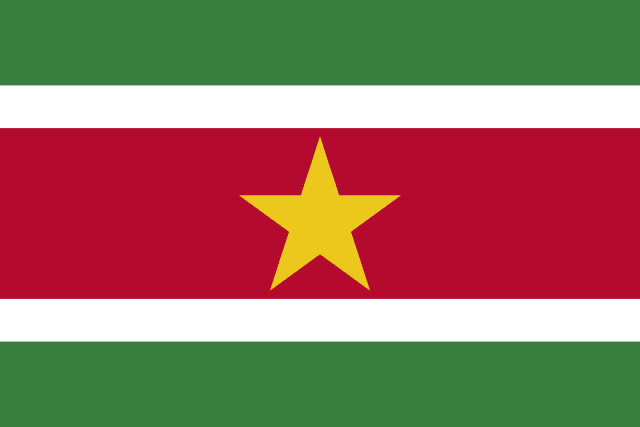
About Suriname
Suriname's extraordinary ethnic mosaic is the legacy of Dutch colonial rule, which brought enslaved Africans to work sugar plantations and later imported indentured labourers from the Dutch East Indies (present-day Indonesia) and British India. The descendants of the escaped enslaved Africans — the Maroons — established free communities in the interior rainforest and preserved African cultural traditions that are among the most intact in the Americas. Their communities, including the Saramaka and Ndyuka peoples, maintain their own languages, religions, and governance systems.
Over 90% of Suriname's territory is covered by tropical rainforest, much of it barely accessible, and the country has one of the world's lowest deforestation rates — making it a significant carbon sink. The economy depends on oil, gold, and bauxite mining, with agriculture and shrimp fishing as secondary sectors. Paramaribo's historic inner city, a blend of Dutch colonial architecture and Caribbean tropical colour, is a UNESCO World Heritage Site.
South America's smallest and most diverse country — the only Dutch-speaking nation on the continent.