


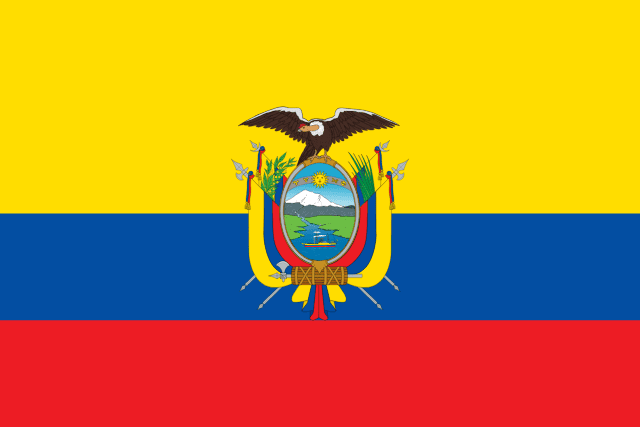
About Ecuador
The Galápagos Islands, a province of Ecuador located 1,000 kilometres off the Pacific coast, are among the most ecologically significant places on Earth. Charles Darwin's observations there in 1835 provided the foundational evidence for his theory of natural selection. The islands are now a UNESCO World Heritage Site and a strictly controlled national park, drawing scientific researchers and ecotourists from around the world.
Ecuador's economy dollarized in 2000 following a severe financial crisis, which brought macroeconomic stability but removed monetary policy tools. Oil, extracted from the Amazon region, remains the dominant export. Bananas, shrimp, cut flowers, and cocoa are also significant. The country has become a global leader in premium cacao production, with Ecuadorian Nacional and CCN-51 varieties prized by chocolatiers worldwide. Quito, the capital, is a high-altitude Andean city whose historic centre is one of the best-preserved in the Americas.
Four worlds in one: the Galápagos, the Amazon, the Andes, and the Pacific coast — all at the equator.